Legacies of mariners
Maritime Museum of Piran
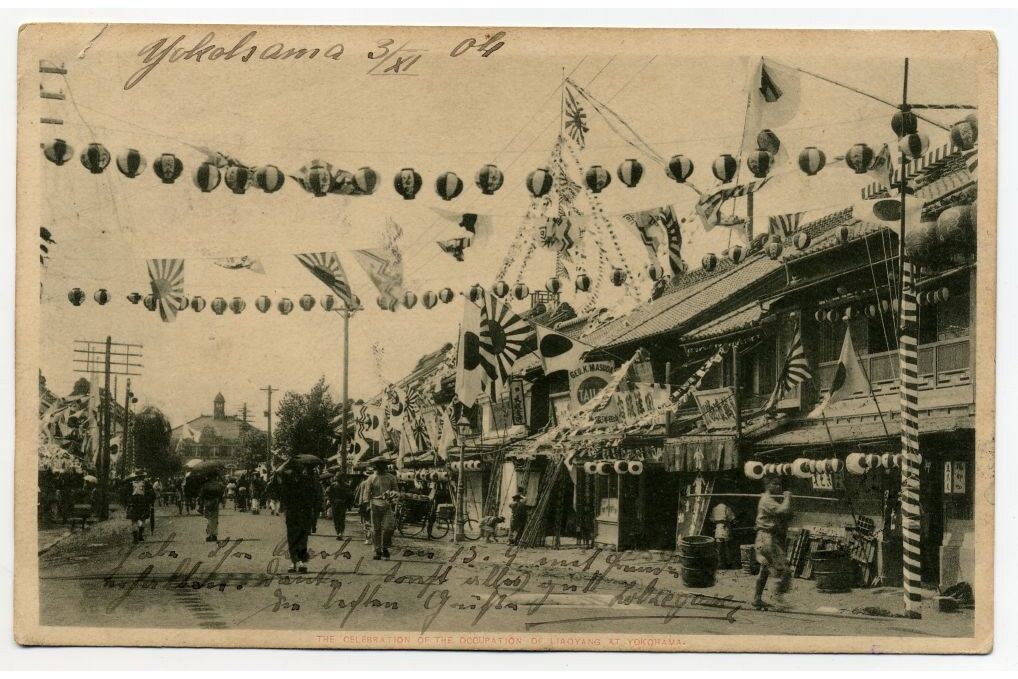
In the 19th century and the first half of the 20th century, sailors were among the few people from the territory of modern Slovenia who travelled to other continents—even though they constituted the largest group to do so. They brought back various objects from their travels. From the late 19th century onwards, these were most commonly postcards and photographs. The Maritime Museum Piran houses a rich collection of East Asian objects from various mariners’ estates. Some objects of this kind are also kept by the Slovene Ethnographic Museum and the Park of Military History Pivka.
The richest collection of East Asian objects in the Maritime Museum Piran comes from the sailors from the Austro-Hungarian War Navy. The monarchy began to send its ships to East Asia more frequently after the opening of the Suez Canal in 1869, when it signed trade agreements with Siam (Thailand), China and Japan. From then on, there was always at least one Austro-Hungarian warship with a crew of 200 to 475 in East Asia, cruising between numerous local ports for a year or more, protecting the interests of the monarchy and its citizens. The number of Austro-Hungarian warships in the region increased in 1900 due to the Boxer Rebellion in China and after 1902, when Austria-Hungary obtained a small concession zone in Tianjin.
The vast majority of non-European objects brought back by Austro-Hungarian sailors from their trans-oceanic voyages originates from East Asia, especially Japan. This indicates that such objects were most highly valued among the sailors, but it is also a reflection of the fact that the sale of souvenirs and collectibles to foreigners was most widespread there, so that the sailors had access to various types of objects. Most of the items preserved are photographs and postcards from China and Japan, which sailors bought for themselves and to send home. These were popular among sailors of all ranks. Other popular items included Japanese tea sets and vases, especially porcelain ones, silk embroidery, paintings and sculptures, and lacquered wooden items, including albums for storing photographs and postcards. Lower-ranking sailors tended to buy smaller, less expensive objects, while officers also purchased furniture and works of art. The most common objects were those adapted to European tastes.
The Maritime Museum Piran has only a small collection of East Asian objects which formerly belonged to sailors from the Austro-Hungarian merchant navy, the Italian Royal Navy, Italian merchant navy, or the Yugoslav Royal Navy. This corresponds to the smaller number of Slovenian sailors who visited East Asia in their service. The Royal Yugoslav Navy, in which many Slovenian sailors served during the interwar period, did not send its ships to the oceans at all.