Blue-and-white porcelain jar
Blue-and-white porcelain jar
©

Blue-and-white porcelain jar
©

Blue-and-white porcelain jar
©
Blue-and-white porcelain jar
©

Blue-and-white porcelain jar
©

Blue-and-white porcelain jar
©

Blue-and-white porcelain jar
©

Blue-and-white porcelain jar
©

Blue-and-white porcelain jar
©


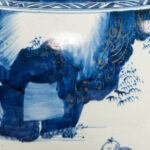


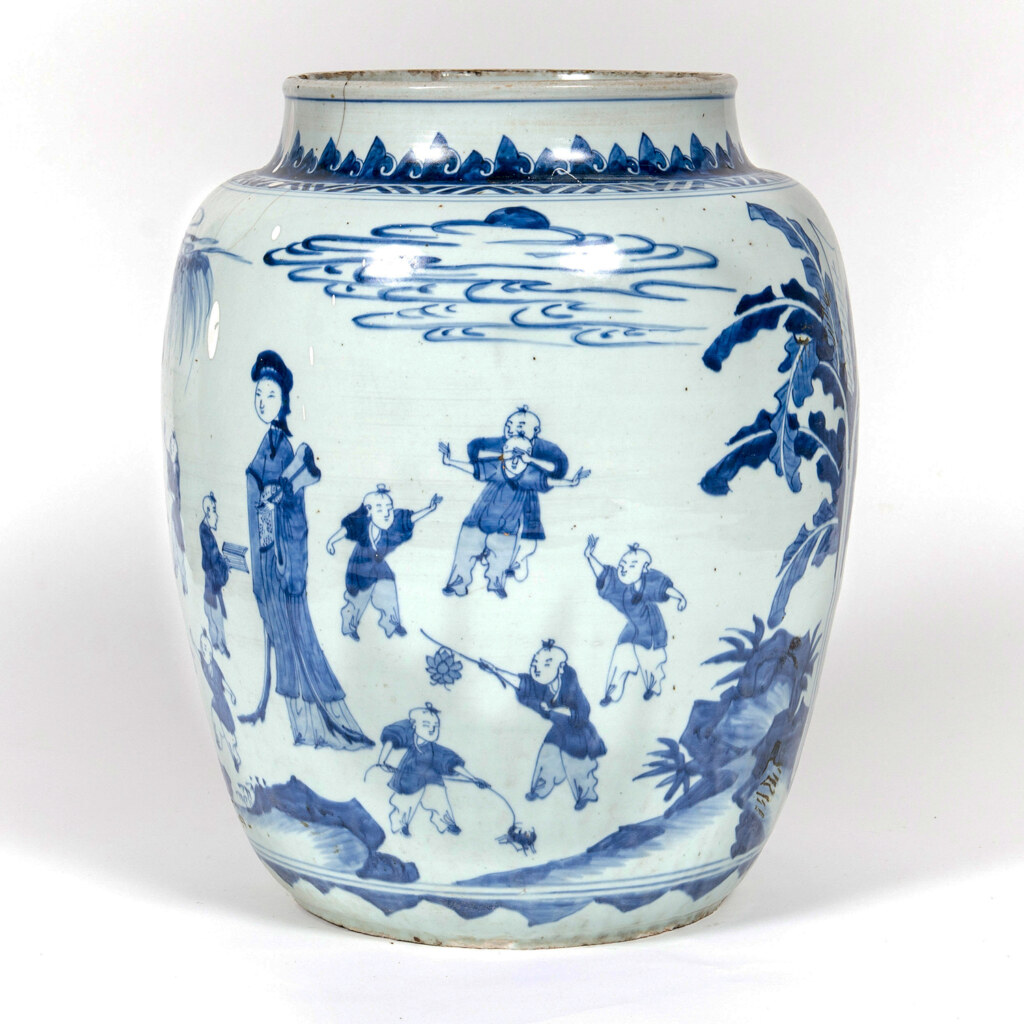
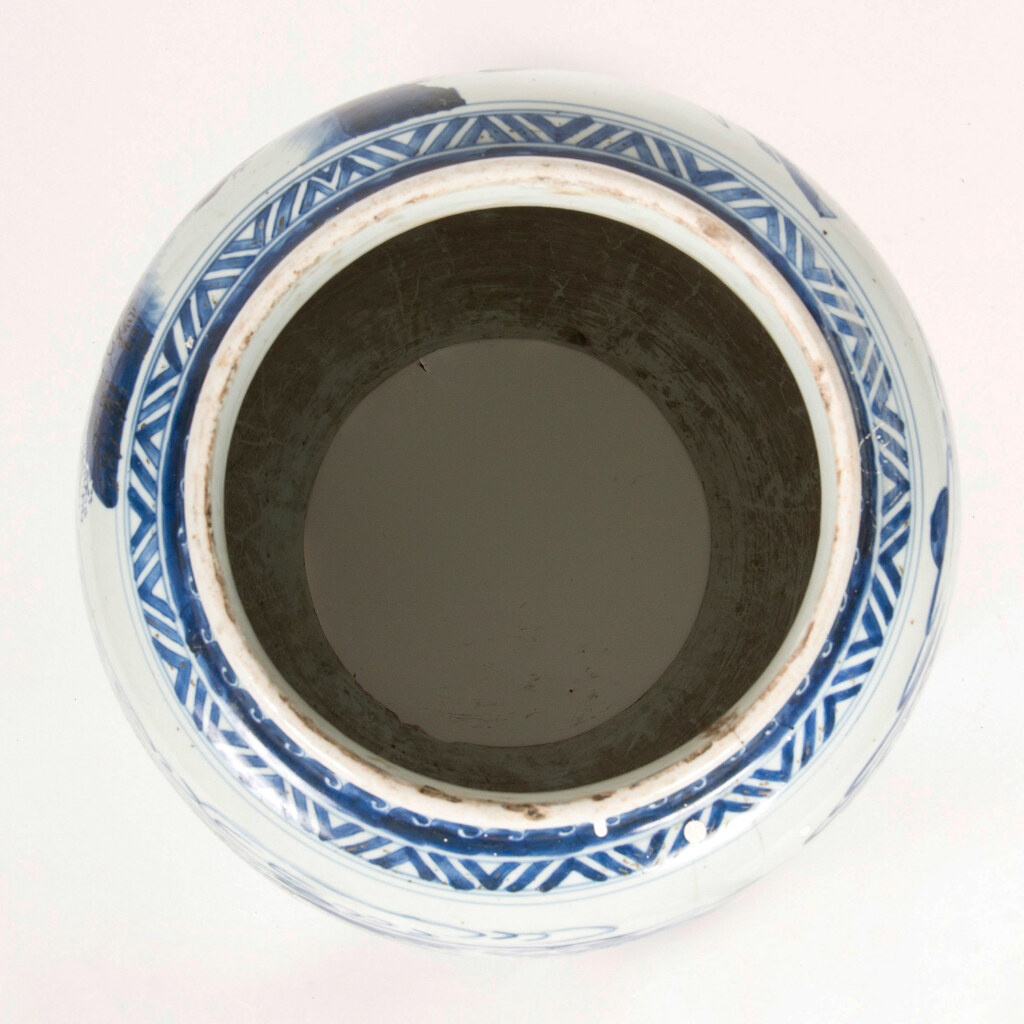
The Chinese porcelain dish is decorated with cobalt painting and depicts fourteen children accompanied by four slender women. This is a common motif in Chinese art, representing the desire for offspring and the appropriate role of women. Four boys with topknots are depicted in a garden playing hide-and-seek, two are catching crabs, three are lighting a fire by a rock, and five children are being watched by their teachers or mothers, who were also very often depicted in their company. The scene of hide-and-seek and the game by a rock are separated by a large banana tree trunk, and clouds are depicted in the upper part of the vessel. At the top, the vase is decorated with a zigzag pattern representing mountains and hills, and the neck has a stylised flame pattern. The motif of children or sons is common in Chinese art, as children, especially boys, symbolise fertility, offspring and blessing. During the Qing dynasty (1644–1912), they were often depicted at school, as education helped ... more
The Chinese porcelain dish is decorated with cobalt painting and depicts fourteen children accompanied by four slender women. This is a common motif in Chinese art, representing the desire for offspring and the appropriate role of women. Four boys with topknots are depicted in a garden playing hide-and-seek, two are catching crabs, three are lighting a fire by a rock, and five children are being watched by their teachers or mothers, who were also very often depicted in their company. The scene of hide-and-seek and the game by a rock are separated by a large banana tree trunk, and clouds are depicted in the upper part of the vessel. At the top, the vase is decorated with a zigzag pattern representing mountains and hills, and the neck has a stylised flame pattern. The motif of children or sons is common in Chinese art, as children, especially boys, symbolise fertility, offspring and blessing. During the Qing dynasty (1644–1912), they were often depicted at school, as education helped men gain access to government positions and thus status and greater wealth.
The vessel has no bottom, but the cover has been preserved in several broken pieces. In August 2025, it was cleaned and reassembled in the conservation and restoration workshop of the National Museum of Slovenia. The vessel was made in the second half of the 17th century during the reign of Emperor Kangxi in a porcelain workshop in Jingdezhen, China. (NVS and VŠ)








Do you have a comment or additional information about the subject?